

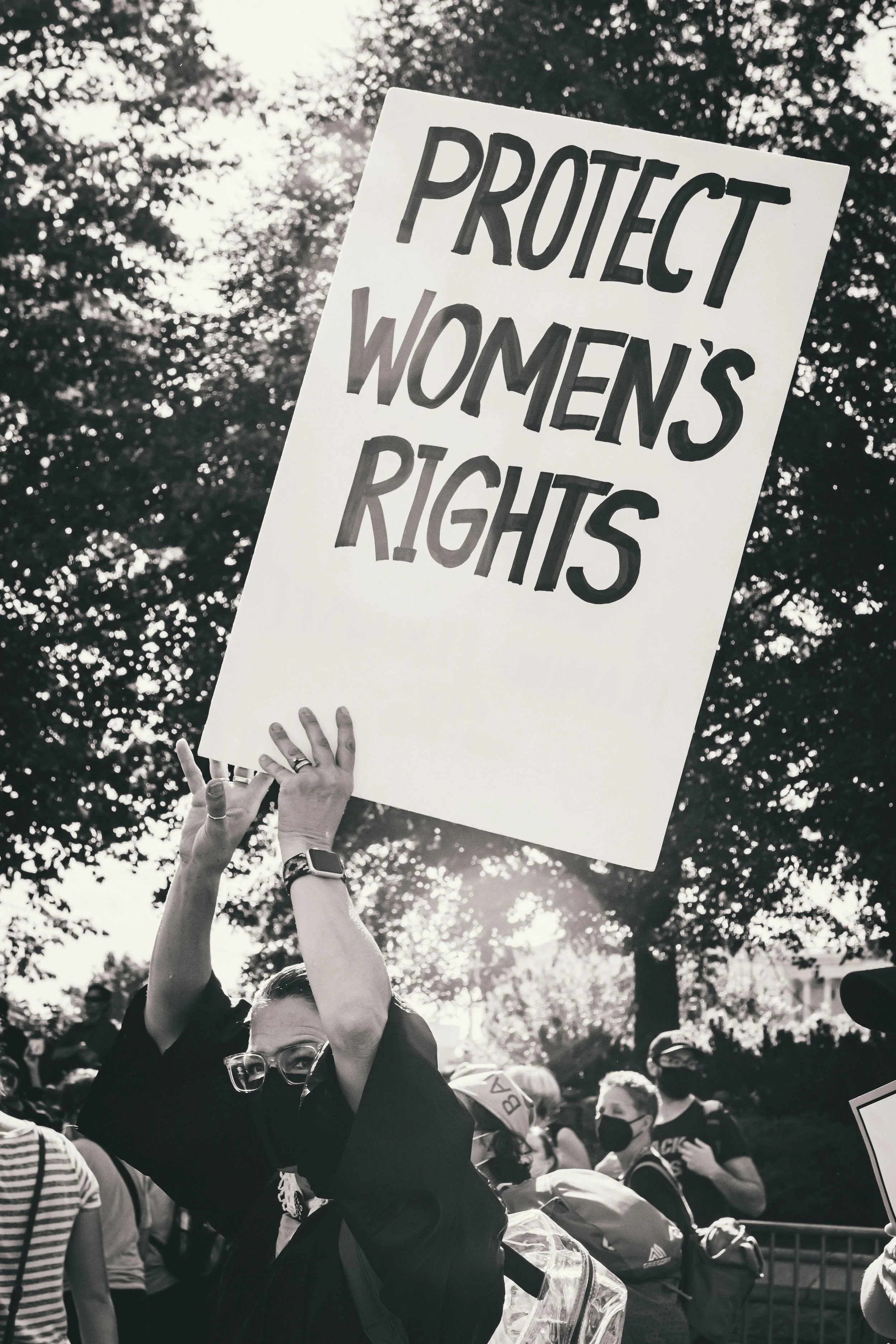
We are taught to believe that equality is a matter of opinion, culture, or geographic luck. When a woman faces subordination, harassment, or systemic exclusion, the dominant narrative treats her grievance as subjective. We are told she is asking for too much, misinterpreting the situation, or fighting a system that cannot be defined.
This is false.
The global baseline for what constitutes discrimination against women has already been settled. It was codified in 1979 under Article 1 of the United Nations Convention on the Elimination of All Forms of Discrimination Against Women (CEDAW). According to CEDAW Article 1:
the term "discrimination against women" shall mean any distinction, exclusion or restriction made on the basis of sex, which has the effect or purpose of impairing or nullifying the recognition, enjoyment or exercise by women, irrespective of their marital status, on a basis of equality of men and women, of human rights and fundamental freedoms in the political, economic, social, cultural, civil or any other field.
When a state ratifies this treaty, it accepts a universal definition of discrimination: any distinction, exclusion, or restriction made on the basis of sex that nullifies or impairs the recognition, enjoyment, or exercise of women's human rights.
189 of 195 UN member states have ratified CEDAW. Conceptually, the world agrees on what discrimination means. The definition is stable, and it is nearly universal. Any narrative you encounter in daily life, the workplace, or the home that tries to minimize unfair treatment is not a valid counterargument. It is a direct deviation from a standard the world has already accepted.
You are not the unreasonable one
You have heard the lines before. You're being too sensitive. That's just how it is here. It's cultural. It's just how he was raised. You're reading too much into it. Each one is designed to put the burden of proof back on you, to make your read of the situation the thing in question, rather than the conduct itself.
Here is what CEDAW Article 1 actually gives you: a settled definition, agreed to by nearly every government on earth, of what discrimination is. Not what it feels like to you personally. Not a matter of local custom. A distinction, exclusion, or restriction on the basis of sex that impairs your rights, full stop. The battle, then, is no longer over the vocabulary of equality. The battle is over the map of its application.
The linguistic trick: passive voice in state reservations
If the definition is universally accepted, how do oppressive systems remain intact? Governments perform global allyship by signing the treaty, then use precise, backdoor legal tools to neutralize it. Under international law, a country cannot directly place a reservation on Article 1 itself. To reject the definition entirely would expose the cruelty of the state.Instead, states use general declarations and reservations to downstream articles, heavily saturated in the passive voice.
An honest text would read: "Our government will continue to allow husbands to dominate their wives, so we reject this treaty." Instead, a state reservation could read something closer to this:"The convention is acceded to insofar as its provisions do not conflict with traditional family structures or prevailing cultural norms."
Notice the erasure of the actor. The passive voice eliminates accountability. It frames patriarchal subordination not as a deliberate political choice made by legislators, but as an atmospheric reality . By using terms like "traditional structures" and "norms," governments weaponize grammar to make the bars of the "patriarchal cage” look natural and inevitable.
Localized lawless zones
By accepting the definition in theory but placing restrictions on how it is enforced, states successfully carve out localized lawless zones, or specific geographic and social pockets where the definition of discrimination is legally forbidden from entering.
The private home. Shielded by exceptions to Article 16 (family law). By insulating marriage, divorce, and custody from international standards, states ensure that coercive control and violence inside the home remain outside the jurisdiction of human rights.
The informal economy. Shielded by labor law exclusions. States accept workplace protections for corporate offices but omit domestic workers, agricultural laborers, and gig workers, leaving marginalized women exposed to unregulated exploitation.
Migrant communities. Shielded by immigration priorities. By stripping non-citizens of access to public resources, the law ensures that a migrant woman cannot access safety without risking deportation, turning her immigration status into an invisible cage.
The social layer: where the real work happens
Reservations operate at the institutional level. They are how a state, as an entity, hedges on paper, and because they're text, they're the layer you can find, quote, and hold a government to. But institutions are not where subordination is made to feel true. That work happens one level down, in culture and religion.
This is the social layer in the matrix of domination, and it operates on its own terms, with or without a reservation on file. Cultural and religious narrative, the stories told through media, rhetoric, doctrine, and imagery about what a woman is supposed to want, tolerate, or sacrifice, installs subordination directly, without needing a state's permission at all. A country can have no reservation on record and still raise women who police themselves, because the installation happened through repetition: what gets rewarded with approval, what gets punished with shame, what gets sanctified as devotion, what gets held up on a screen as the version of womanhood worth aspiring to. Guilt, shame, and fear do quietly, at the level of the individual conscience, what a legal carve-out can only do at the level of the state.
That is what makes this layer harder to fight than a reservation. A reservation is an artifact of an institution; external, findable, arguable with. A cultural or religious narrative doesn't feel like an imposition at all to the person absorbing it. It feels like faith, or taste, or just how things are. The subordination doesn't feel chosen by anyone; it feels natural and unchallengeable, which is exactly why it doesn't need an institutional backdoor to survive a state's ratification of Article 1. Take away every reservation a state has ever filed, and the culture would still be doing its work the next morning.
Where the trick lands
Legal exceptions and cultural narrative reinforce each other. When a state draws a boundary around a lawless zone, society reads the subtext clearly, and individuals in power translate that loophole into personal license. How a reservation filed in Geneva ends up sounding, decades later, like your boss, your partner, or your landlord telling you that your demands for dignity are unreasonable, and how that gets absorbed and repeated long after anyone remembers where it came from, is a story in itself.
For now, the task is making the legal cages visible before we can trace how they get inherited. Over the coming weeks, this series will move article by article through CEDAW, looking at the reservations countries have raised. Next: Article 2, and the obligations states accept on paper, once they've agreed to the definition in Article 1.