

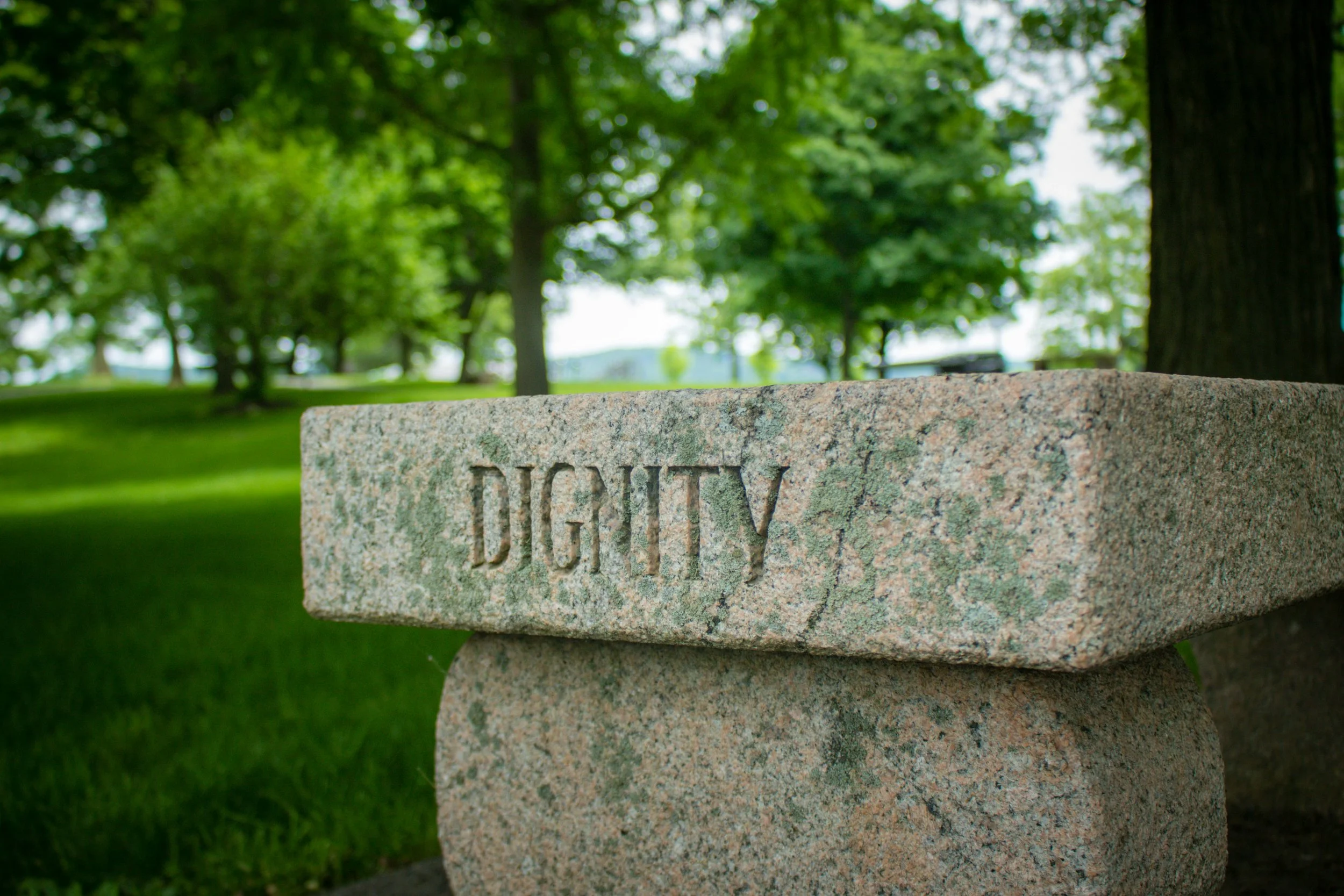
Maputo Protocol Article 3: Right to Dignity
What it does
Article 3 establishes dignity as a standalone, freestanding right, not a preambular value or an interpretive lens applied to other rights, but its own enforceable article.
What it states
Article 3 has four parts:
Every woman has the right to dignity inherent in being human, and to recognition and protection of her human and legal rights
Every woman has the right to respect as a person and to the free development of her personality
States Parties must adopt measures to prohibit any exploitation or degradation of women
States Parties must adopt measures protecting women's dignity specifically from all forms of violence with sexual and verbal violence named explicitly
Use as a vehicle for new protections
Dignity has a specific lineage worth tracing. The UDHR names it as foundational in 1948, "all human beings are born free and equal in dignity and rights", but the UDHR is a declaration, not a binding treaty; it names the principle without creating an enforceable claim. CEDAW, adopted three decades later, imports that exact language into its own preamble almost verbatim, but never converts it into an operative article. Dignity remains aspirational framing there too, not something a woman can claim as a standalone right under the treaty. US law follows the same pattern: "dignity" appears rhetorically in Supreme Court opinions such as Casey, Lawrence and Obergefell, but always in service of justifying a different named right, never as its own enforceable cause of action.
Maputo Protocol is the first of the three bills of rights to break that pattern. Article 3 takes dignity out of preambular language entirely and makes it a standalone, binding, operative right, with states affirmatively obligated to protect it, including from the previously-unnamed category of verbal violence. Sixty years after the UDHR first named dignity as foundational, Maputo Protocol is the first instrument in this lineage to actually operationalize it.
Reservations
No State Party has entered a reservation against Article 3. That continues the pattern from Articles 1 and 2. The provisions states resist are the specific, operational ones (marriage registration, reproductive health authorization, divorce procedure), not the foundational statements of what women are owed as a matter of personhood.
Both countries constitutionalize dignity directly, and in South Africa's case, arguably more robustly than Maputo Article 3 itself.
South Africa — Section 10 of the Bill of Rights: everyone has the right to have their dignity respected and protected, connecting to every other right in the Bill of Rights, and dignity is declared non-derogable, meaning it can't be limited under any circumstances. It's treated as both a standalone right and a foundational constitutional value that courts use to interpret every other provision — described as the "cornerstone" of the Constitution. South African courts have built out one of the most extensive dignity jurisprudences globally, on par with German constitutional law, which was itself the first post-war legal system to concretely apply the dignity principles from the UDHR preamble — so in a real sense, South Africa's domestic jurisprudence is closer to where Article 3 was reaching than the Protocol's bare text is. Twenty-seven Rights Explained - Our Constitution +2
Zimbabwe — Section 51 of the Declaration of Rights: every person has inherent dignity in their private and public life, and it's both a standalone right and one of the founding values and principles courts must apply when interpreting the entire Constitution. It's been directly cited in real cases — Zimbabwe's Constitutional Court relied on the dignity provision alongside the freedom-from-torture provision to strike down judicial corporal punishment of juveniles in 2019. And notably: Zimbabwe's own government has explicitly named its dignity and personal-security provisions, read together with the constitutional rights of women, as the legal basis for protection from gender-based violence — that's a direct domestic-to-Maputo throughline worth naming in the piece.
How you'd actually enforce it, as a woman, in practice:
Domestic courts first — a dignity violation gets litigated as a constitutional claim in national courts (South Africa's Constitutional Court, Zimbabwe's Constitutional Court), citing the domestic provision directly. This is the primary and fastest route, and it's mandatory to try before anything regional.
National Human Rights Commission — both countries have one; you can file a complaint there without a lawyer, and it can investigate and refer matters onward.
Regional backstop, once domestic remedies are exhausted — the African Commission on Human and Peoples' Rights (which sits over both the African Charter and Maputo) or the African Court on Human and Peoples' Rights can hear individual complaints, but only after you've gone through domestic courts first and gotten no remedy. This is slow, and Zimbabwe hasn't accepted the African Court's jurisdiction for direct individual petitions the way some other states have — so in practice, for a Zimbabwean woman, the Commission route is more realistic than the Court route.