

Maputo Protocol Article 8: Access to Justice and Equal Protection before the Law
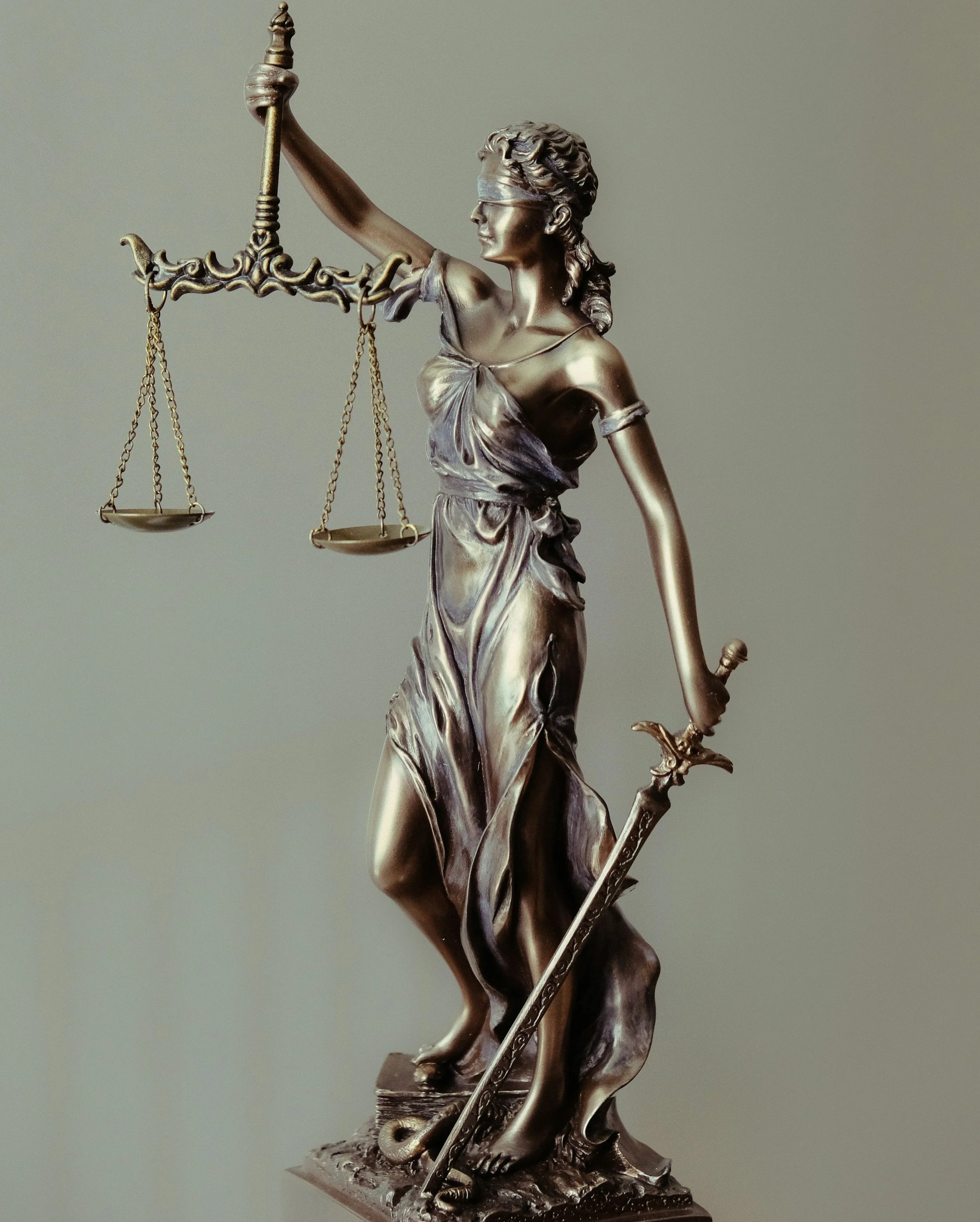
Article 8 guarantees that every other article in the Protocol is actually usable. A right that can't be enforced is a right in name only. It's the mechanism article: everything from Article 3's dignity to Article 6's marital protections only functions if a woman has real access to a court and a legal system equipped to recognize her claim.
What it states
Women and men are declared equal before the law, with the right to equal protection and benefit of the law. States must ensure:
(a) Effective access by women to judicial and legal services, including legal aid
(b) Support for local, national, regional, and continental initiatives that provide women access to legal services, including legal aid
(c) Adequate educational and other structures to sensitise everyone to the rights of women
(d) Law enforcement organs at all levels are equipped to effectively interpret and enforce gender equality rights
(e) Women are represented equally in the judiciary and law enforcement organs themselves
Use as a vehicle for new protections
Two provisions do work CEDAW's equivalent doesn't reach. Article 8(a)'s explicit guarantee of legal aid matters because access to justice without the means to afford it is theoretical. This closes the gap between a right existing on paper and a woman actually being able to walk into a courtroom. CEDAW's Article 15 establishes legal equality in general terms but doesn't name legal aid as a state obligation the way Maputo does here.
Article 8(e), requiring women's equal representation within the judiciary and law enforcement itself, is the more structurally ambitious piece. It reframes access to justice as a composition problem, not just a procedural one: a legal system interpreting gender equality rights is more likely to actually protect them if women are inside the institutions doing the interpreting, not only appearing before them as claimants. That's a different kind of enforcement than most domestic systems attempt by law.
Reservations
No State Party has entered a reservation against Article 8.
Article 8 in practice: South Africa and Zimbabwe
Both countries translate Article 8(a)'s legal aid obligation into a dedicated state-funded body. South Africa's Legal Aid SA is an independent statutory body under the Legal Aid South Africa Act, funded from the national treasury. It ran 64 local offices and 64 satellite offices nationwide, spending roughly R1.7 billion in 2016-17 alone. It operates alongside Section 34 of South Africa's own Constitution, which separately guarantees everyone the right to have a legal dispute resolved in court. Zimbabwe's equivalent is the Legal Aid Directorate, established under its own Legal Aid Act and run through the Ministry of Justice.
Both systems apply a means test. An applicant has to demonstrate genuine inability to afford private representation before qualifying, and South Africa's system includes a contribution scheme for applicants who fall just above the threshold, where they pay a partial amount toward their own case rather than receiving it free.
The gap is in funding, not law. Zimbabwe's own Legal Aid Act obligates the state to adequately fund the Directorate, but reporting on its implementation has found the state has consistently failed to meet that obligation, leaving the Directorate unable to cover the full range of costs an indigent client actually faces, such as travel to court, filing fees, enforcement after judgment. South Africa's Legal Aid SA, despite spending nearly its entire allocated budget each year, still operates under chronic underfunding relative to demand. Article 8 is legislated and institutionally real in both countries. The distance between "effective access" as written and "effective access" as funded is where the right actually lives or dies for the woman trying to use it.